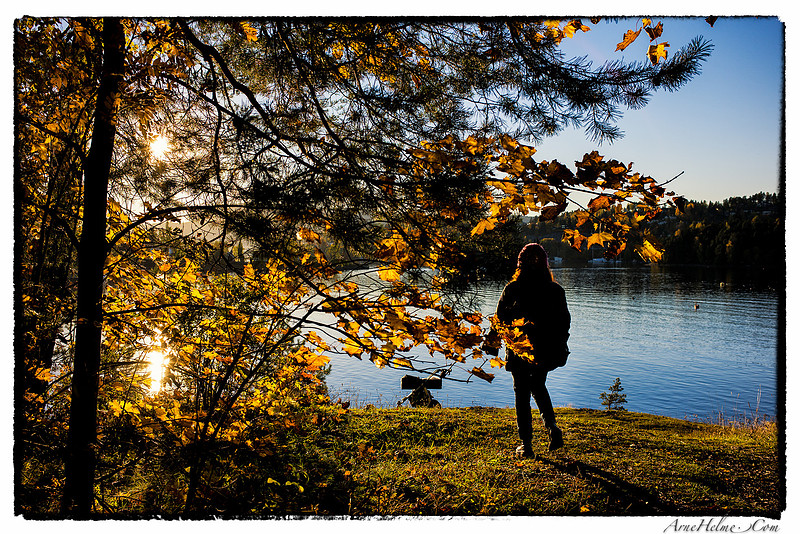
Kalvøya at sunsetKalvøya is a recreational area just outside of Sandvika in Norway. I visit Sandvika frequently because it is only 10 minutes walk from home. Yesterday I reached Kalvøya together with my wife a few minutes before sunset. I managed to capture the following photo using my Leica M 240 with the Noctilux 0.95 ASPH. lens at full aperture:
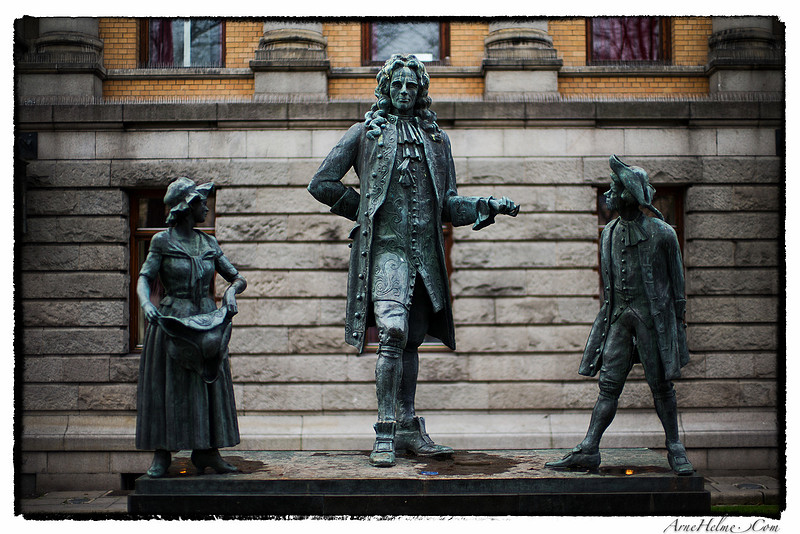
Noctilux- King of the lightMuch has been written about the mythical Noctilux lenses for the Leica M system Often referred to as the "King of the night" lens, it has since its very first introduction been viewed as one of the landmark lenses for available light photography. The first Noctilux with a a maximum aperture of 1.2 was introduced in 1966 and in production until 1975. It is sought after by collectors and therefore very hard to find second hand for anything but a very steep price. The classic Noctilux 1.0 was introduced in 1976. The lens was in production until it was replaced by the Noctilux 0.95 ASPH. in 2008. The special signature drawn by the classic Noctilux lens is considered by many to be the ultimate look for Leica photography. For many years it was the reference against which all other ultra fast standard lenses were measured. On my trip today to Oslo this morning I decided to spend some time shooting pictures near the National Theatre and the Parliament building. The photo below shows a statue of Norwegian writer Ludwig Holberg in front of the National Theathre building:
The photo below shows the statue of Norwegian actress Wenche Foss:
I have been fortunate to own several Noctilux lenses. First the classic Noctilux which I obtained back in 1998, and later I received the first Noctilux 0.95 lens to be delivered in Norway, in 2009. Just like the Summilux 75mm les, which is also a favourite of mine, I have owned, sold and bought again these lenses, because of the regret I have experienced by not having them available. The 3D rendering of these lenses is second to none, and illustrates the true potential that can be achieved using fast lenses. The photo below shows a statue of Norwegian write Bjørnstjerne Bjørnson in front of the National Theatre:
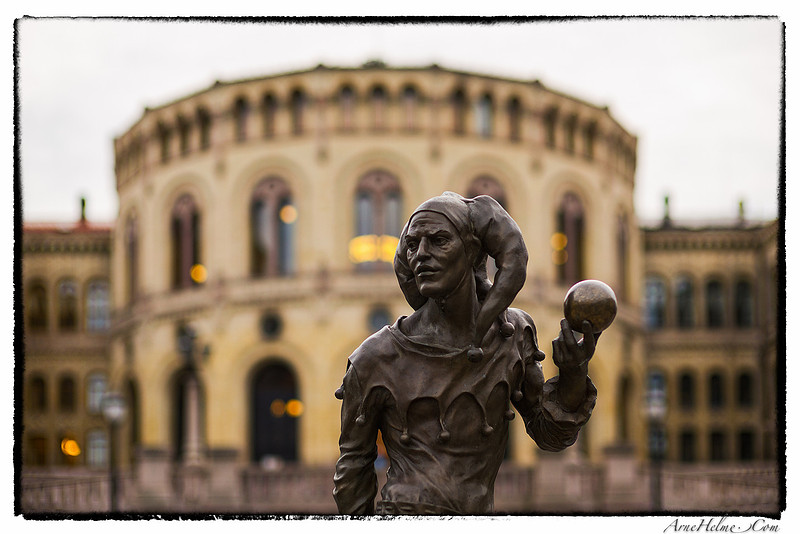
I prefer to call the 0.95 Noctilux lens "The king of the light". The high contrast and extremely narrow depth go field when used wide open makes the NX 0.95 a very fine lens to isolate subjects against the background - with a beautiful rendering of the out of focus areas. Whoever put a statue of a fool in front of the Norwegian Parliament building must have a great sense of humor:
The photos shown in this blog entry were shot in Oslo today, the 16th go november, 2013, using a Leica M 240 with the Noctilux 0.95 lens. All photos were shot using the Noctilux at its widest aperture of f/0.95.
The photos show what can relatively easy be achieved using this lens.
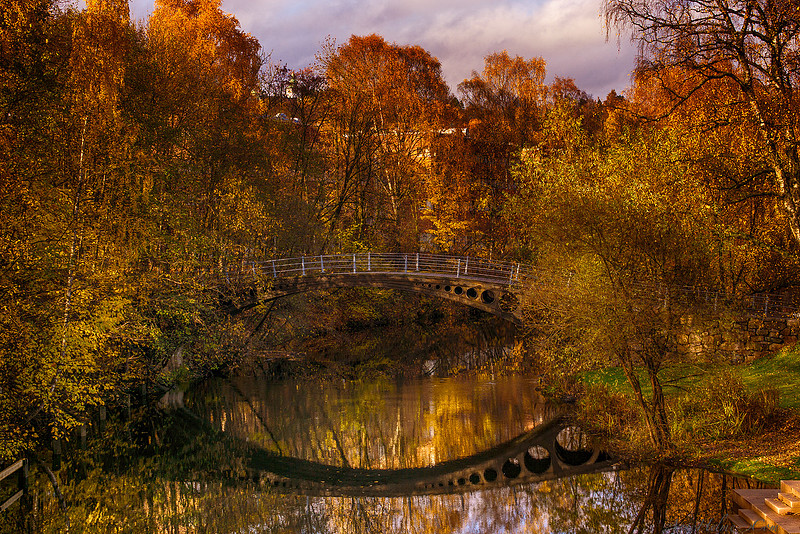
The picture below, shot at Karl Johans gate in Central Oslo, shows what can be achieved with the Noctilux 0.95 at full aperture and focus set at infinity. Doesn't look like it was shot using an ultra fast standard lens, does it: The Monet bridge in SandvikaHidden away in Sandvika, Norway, lies a old iron cast bridge serving as a landmark of past history. I walk past the bridge every day on my way to the local train station. Forgotten by many, this bridge once serves as inspiration for a famous painter, and its history also inspired me to write this blog entry about it, and its surroundings in Sandvika today. The bridge was built at Bærums Verk in 1829 and was in use as part of the main road through Sandvika until the mid 1970s. When the new main road bridge was built the old bridge was moved 200 meter further up the river. It is now serving as a bridge for pedestrians and is still part of the local infrastructure in Sandvika:
In Sandvika, the bridge is known as the Monet bridge and named after Claude Monet (1840-1926), the founder of French impressionist painting. Claude Monet painted "Sandviken Village in the Snow" while he visited the small village at the sea just outside of Christiania (now known as Oslo, the capitol of Norway) back in 1895. Monet's painting of the bridge is illustrated below (courtesy of Wikipedia Commons):
The house to the lower right in Monet's painting was recently restored, and can now be rented for special occasions, wedding ceremonies and so forth (see reference at the end of the blog entry). A few other remaining old buildings can be seen in the area, but most of Sandvika has changed in such a way that little of the atmosphere shown in Monet's painting remains:
Inspired by Monet I decided to recreate a digital age impressionist version of the original scene painted by Monet with the current bridge and the house from the original painting:
The photo below shows the old Monet bridge and its surroundings today. Recreational area with playground I have never seen in use:
Although quite some effort has gone into preserving the bridge, it is hard to overlook the modern industrial surroundings:
The bridge is still in use by many people in Sandvika. It is now part of the local infrastructure for pedestrians and bicyclists:
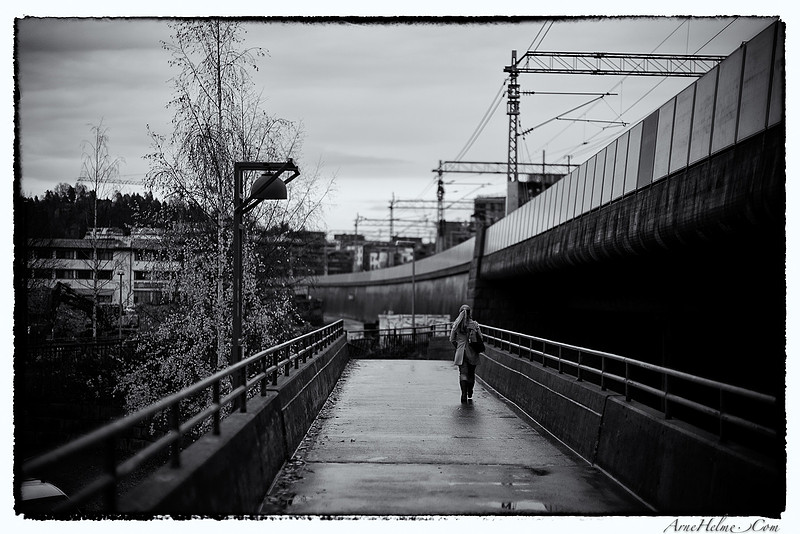
A few years back DN, one of the Norwegian financial newspapers, contained an article called: "Deaths in the shadow of modern shopping malls" (see link at the bottom of the blog entry), or "Monet for nothing!", freely after the 80s song by Dire Straits. The article covered the implications of building one of Scandinavia's largest shopping malls in a small village, and the consequences for the local community. The key observation in the article is that the local environment is dying as most activities are now found inside the large shopping mall that covers a large portion of the central area in Sandvika. The process is illustrated elegantly by the authors using the invasive Iberia slug as an example. Just like the slug eats everything in its surroundings and leaves a lifeless environment behind, the introduction of large shopping malls does the same to small villages. Below is a photo of a new bridge next to the railroad and across the highway that is also passing through Sandvika. The phot is shot just a few hundred meters from the Monet bridge. According to the new national transportation plan the highway will be placed in a tunnel under Sandvika during the next 5-10 years, but the rail road will remain.
I guess my personal take on Sandvika and its Monet heritage is that the convenience of the infrastructure surrounding the village outweighs the lack of aesthetic in the local community. In Sandvika, there's always a train departing for Oslo, or it is just a few minutes away. The beautiful Kalvøya island and the sea side attracts people from all over the Bærum county on sunny days summer and winter. The photo below was shot on Kalvøya earlier this fall:
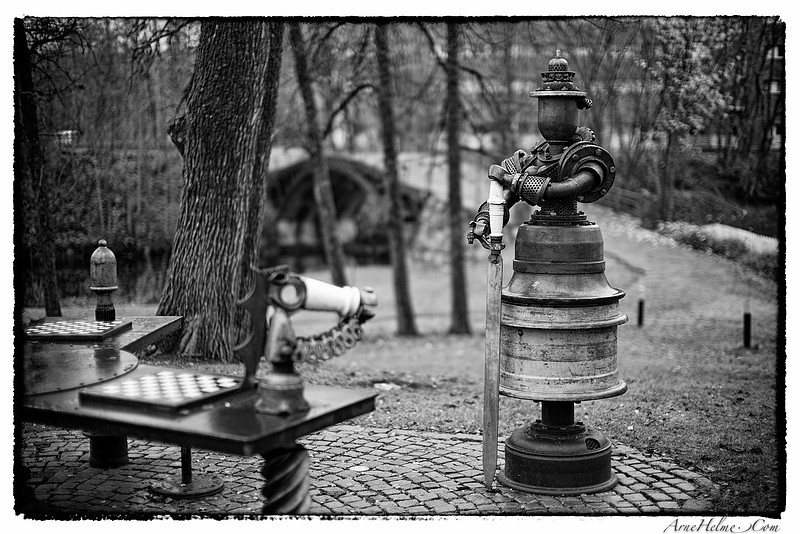
All photos in this essay were shot using the Leica M (240) rangefinder camera. The first picture was shot using the Summilux 50mm ASPH. lens. The last photo was shot using the Summilux 35mm ASPH. FLE lens. The other photos were shot using the Noctilux 0.95 50mm ASPH. lens. All shots were made with the lenses set at their wides aperture. The Monet house can be seen and visited in Sandvika. More information about the house can be found here: http://monethuset.no The DN article (in Norwegian) with more photos from Sandvika can be found here: http://www.dn.no/d2/arkitektur/article1455236.ece
A day with the Noctilux 0.95/50mm ASPH. lensFew lenses have been surrounded with more mystique than the Leica Noctilux. Since the first version was released in the late sixties and until now it has been a lens most Leica photographers have wanted to own and use. Highly priced, difficult to find for anything other than close to new price, the Noctilux remains a true gem of the Leica lens series. I'll not discuss the lenses or their history in this blog entry. Instead I suggest you read Thorsten von Overgaard's excellent information about the Noctiluxes: http://overgaard.dk/leica-50mm-Noctilux-M-ASPH-f-095.html. In the past I used to own both the original f/1.0 lens and the f/0.95 Noctilux lenses. As interests come and go I decided to sell these lenses in order to invest in other/new lenses. At the time I deciced to part with the original f/1.0 lens my decision was to let it go in order to get the Summilux 75mm instead. Those of you who know me are aware of my obsession and fascination with the 75mm Summilux. It too, renders scenes close no no other lens I know of. Back in 2009 I was fortunate enough to pick up the first Noctilux f/0.95 to be delivered in Norway: http://www.l-camera-forum.com/leica-forum/customer-forum/88324-first-noctilux-f0-95-norway-sample.html. The day I heard the first rumours about a new Noctilux I immediately pre-ordered it from the Norwegian importer. When I got the lens it took almost 6 months before the second lens was delivered in Norway. At the time I had the Leica M8 camera, and the first year with the Noctilux f/0.95 was therefore limited to the 1.33x crop factor of this camera. It enable me to use the Noctilus as a short tele lens until I decided to sell it because it was not aligned to the rangefiner in my M8. The handling of the lens is excellent. The focus ring on my lens is smooth but firm. I agree with others that the lens balances quite well on the Leica M cameras. It is, of course, heavy, and I had forgotten how large the lens actually is! Below are some sample photos that I made this weekend using the Noctilux f/0.95 lens using the Leica M 240 camera:
And here moving in in for a close-up of the statue:
Overcast weather and rain in the air helped me capture many photos where the Noctilux could shine at f/0.95. Below is a snapshot I took on my way to the shop while streetwalking:
A few hundred meters from my home I came across the scene illustrated in the photo below. I shot it at f/0.95, and I am amazed by the level of detail the lens can show at its widest aperture:
Below are two sample photos that I made using the Noct wide open using my M8.2 back in 2010. The uploaded images do not by far show the potential of the lens but they hint at what you can expect. Luckily, the lens I got was a perfect match to my M8.2 - the focus was spot on:
And the "Damien" portrait of my son Bjarne on one of his very gloomy days:
Below is a photo I took of my ex wife, Cindy, with the original Noctilux f/1.0 lens using the Leica M6 camera back in 1997:
Looking back, and seeing what can now be achieved using the Leica M 240 and the new Noctilux f/0.95 lens one cannot but admire the amount of progress that has taken place.
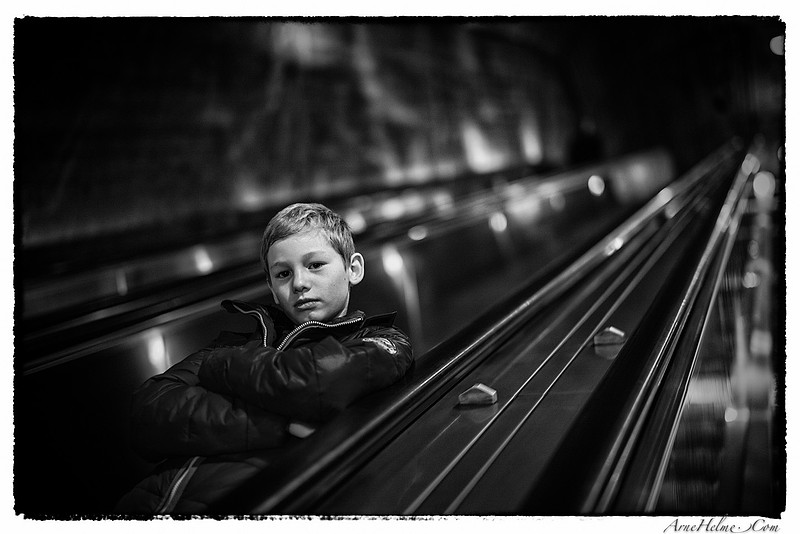
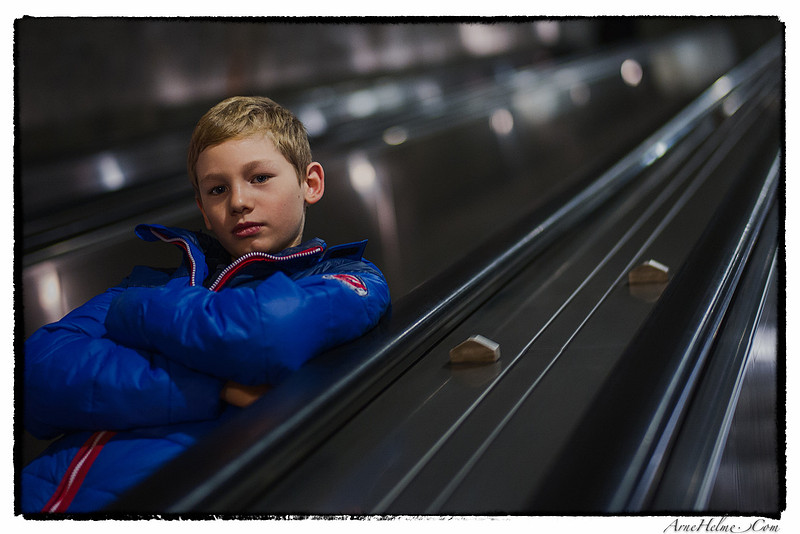
A day with the Summilux 50mm ASPH. lensDue to my obsession with the Summilux 75mm, using the Summilux 50mm ASPH. was never a priority to me. However, inspired by Fredrik Lübbe's work with the Summilux 50mm ASPH., yesterday was a practice day with this lens. I've already posted some pictures, but here are some of the other pictures from yesterday's trip to Oslo, Norway. My 10 year old son, Bjarne, was with me and posed willingly on his own terms - I guess that's most 10 year old boys do.
All pictures except for the picture below were shot at Nationaltheateret train station in Oslo, Norway. The architecture / lighting conditions at the station is very nice to use for portraits and poses.
Directing Bjarne is usually done on his terms and conditions:
In Oslo, me teamed up with my sister's family. Here's a portrait of her son, Aksel. I am very please with this picture and the way the Summilux renderes sharpness and out of focus area.
Below, a portrait of my sister, Line:
Alex and Marion:
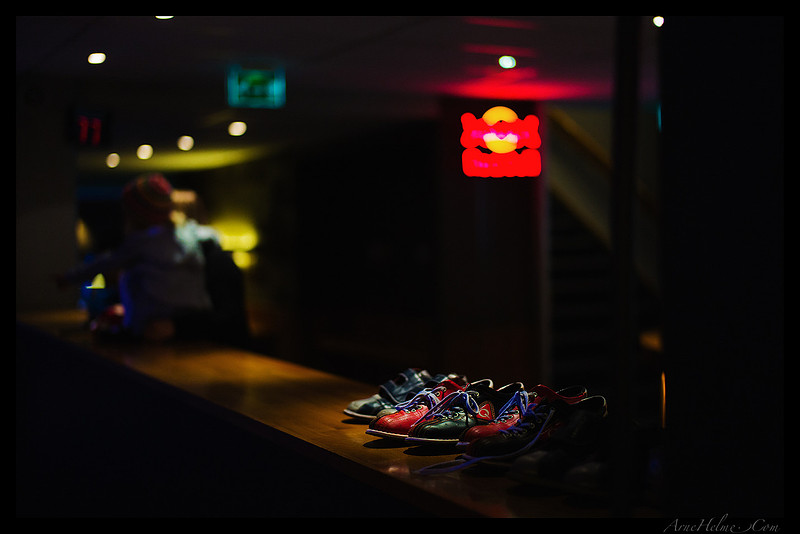
At the bowling centre I took the following picture. For me this picture works best in colour:
My wife challenged me to post a colour version with a bit of cropping of the first posting in this blog entry, so here it is. I forgot to say that this is ISO 2500 on the M 240, not bad:
|